
Whale watching in Washington is some of the best in the world, offering the opportunity to spot humpbacks, orcas, minke whales, and gray whales. You’ll never forget the first time you spot a fin, hear a whale spout water vapor 12 feet into the air, or see one breach before crashing back into the sea.
While summer and early fall are your best bets for whale watching in Washington, there’s never a 100% guarantee of a sighting. While some species migrate, transient orcas and minke whales can usually be spotted year-round. To improve your chances, consider using an app like Whale Alert, which tracks whale sightings in real time (and helps reduce collisions between boats and whales). Additionally, the Orca Network viewpoint map shows reported whale sightings, while the Whale Trail provides an interactive map of recommended viewing sites.
Hoping to spot some of these majestic mammals yourself? Here’s where to see whales in Washington, from land and sea.
Responsible Whale Watching in Washington
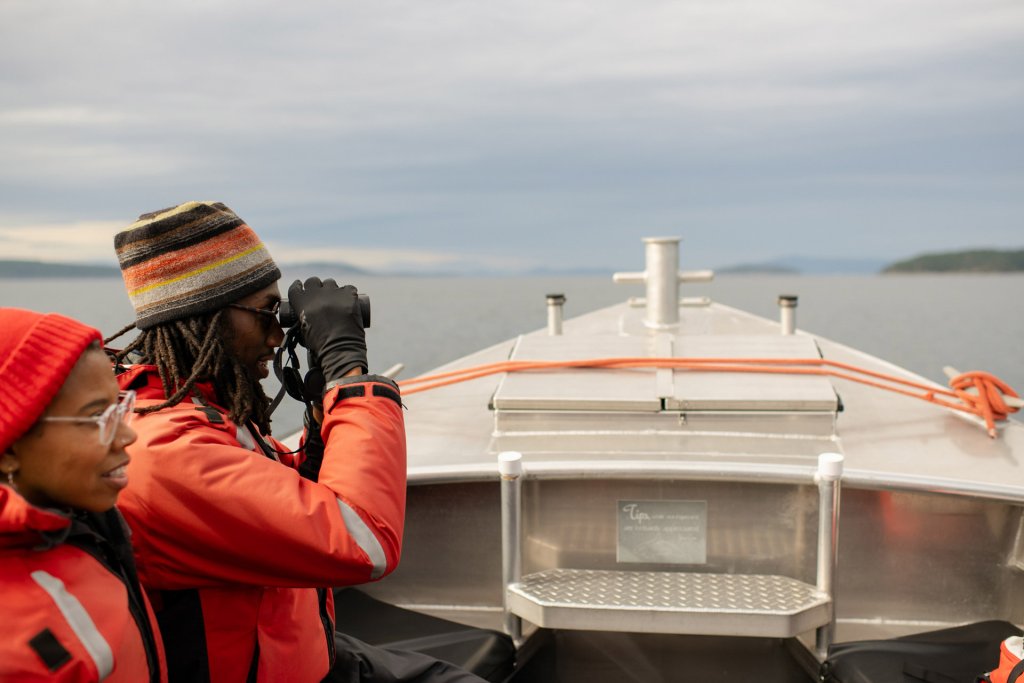
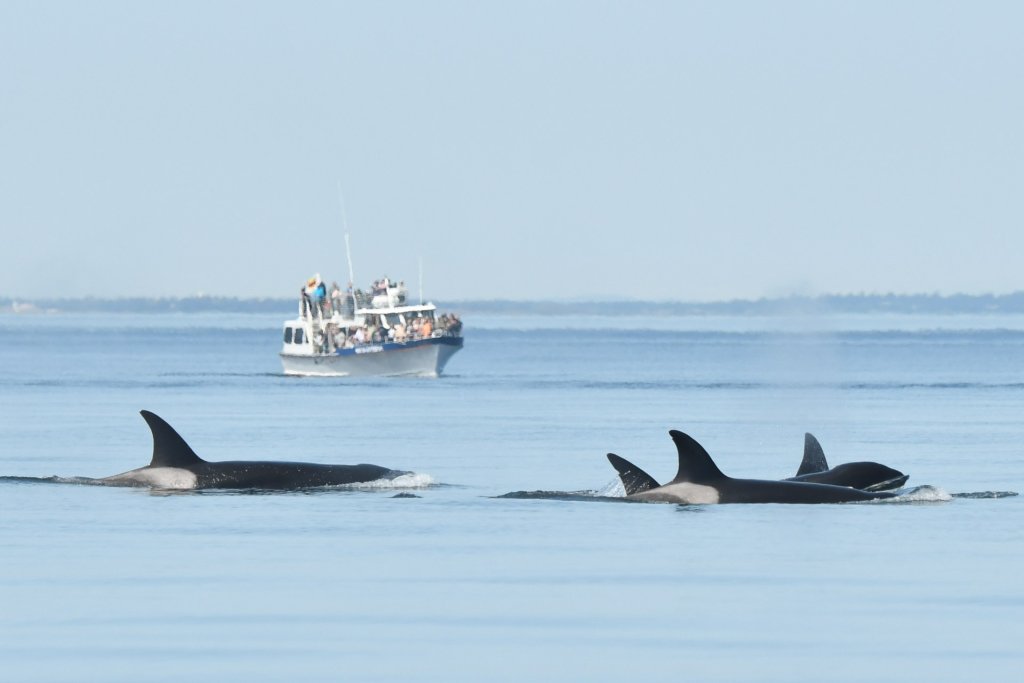
Washington’s Southern Resident orcas are extremely endangered, with only 74 remaining as of July 2025. Stress from noise, pollution, and vessel traffic can negatively impact breeding, feeding, and socializing. Whether whale watching from land or sea, be quiet, cautious, and give whales plenty of space. The Whale Museum in Friday Harbor has handy guidelines specifically for kayakers, and you can also view regulations and tips from Be Whale Wise.
When choosing a tour company, consider members of the Pacific Whale Watching Association (PWWA), a consortium of companies committed to education, conservation, and wildlife viewing. All boat tour companies mentioned are PWWA members.
Where to See Whales in Washington
San Juan Islands
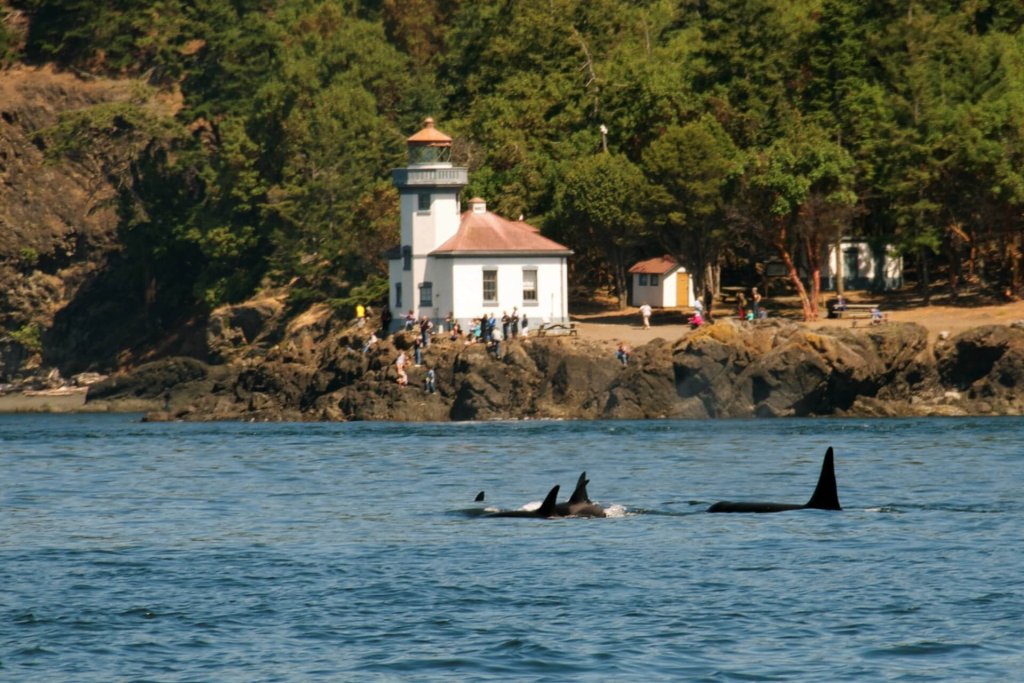
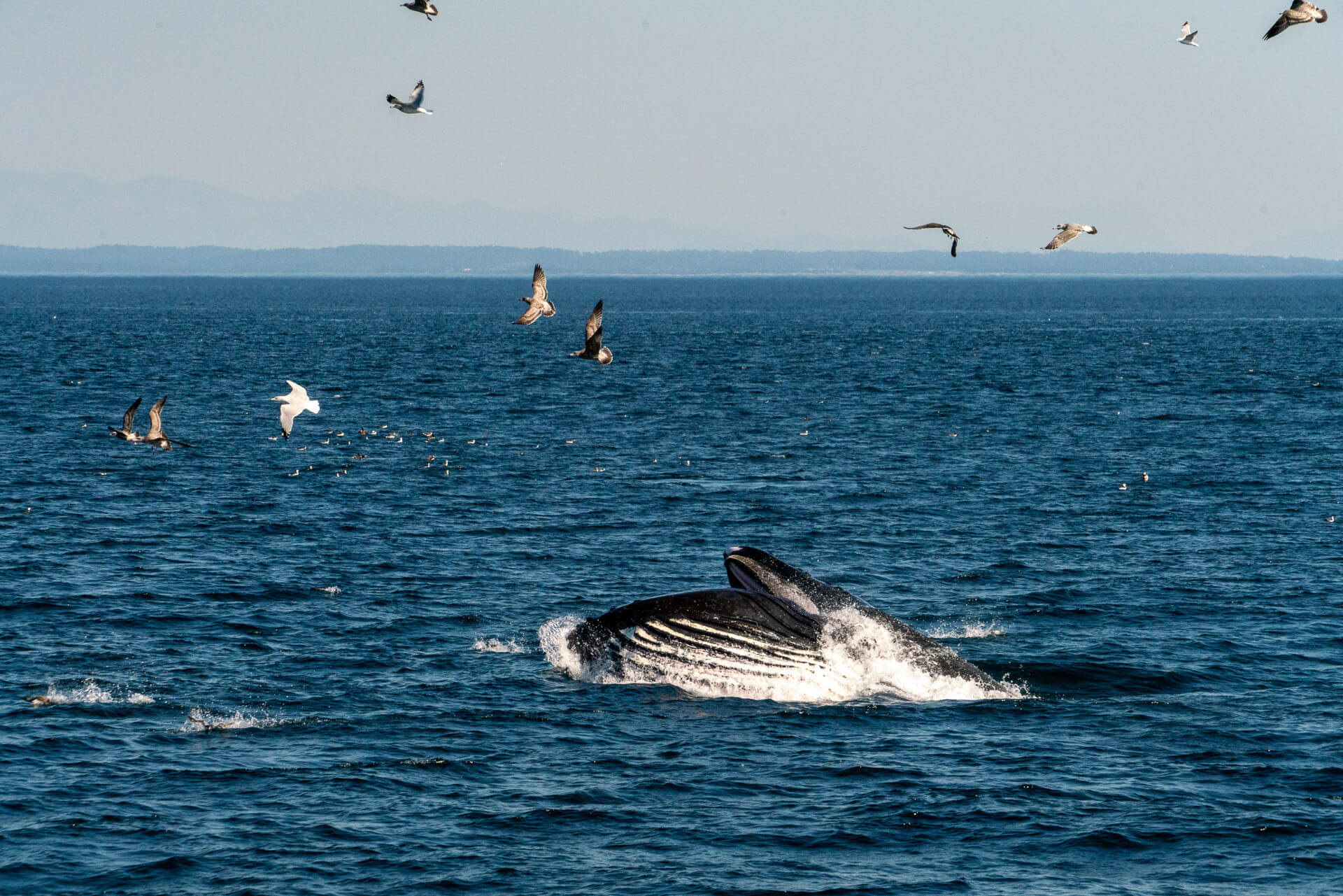
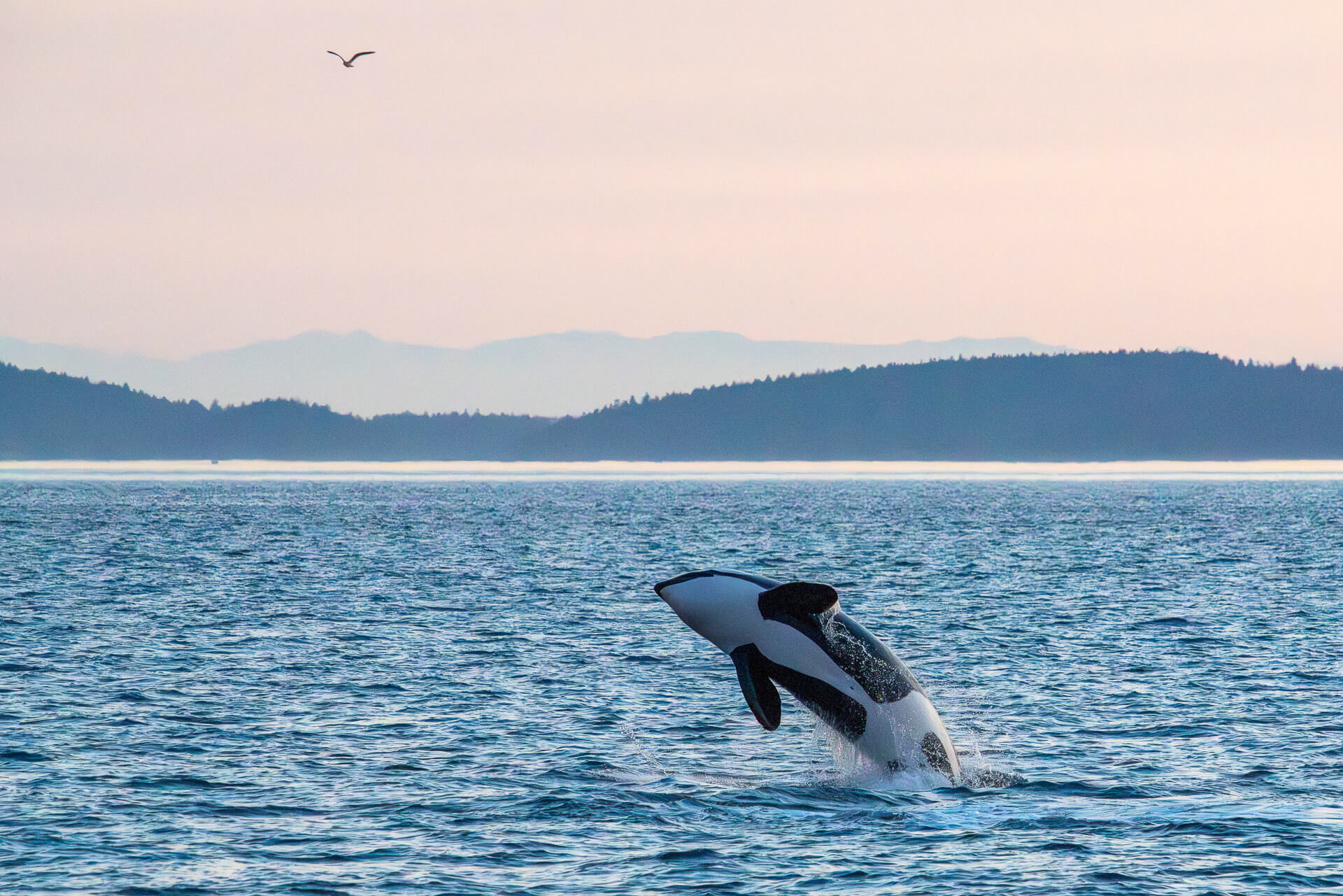
An iconic archipelago in the heart of the Salish Sea, the San Juan Islands are renowned for whale watching. Here you can spot orcas, humpbacks, minkes, and gray whales. While peak season is considered mid-June through early September, whales can often be spotted from April through October. In Friday Harbor, learn about the Southern Resident orcas of J, K, and L Pods at The Whale Museum.
From Shore
On the west side of San Juan, Lime Kiln Point State Park, also known as Whale Watch Park, is one of the best places in the world to spot whales (especially orcas) from shore. Other land-based viewing spots on San Juan include American Camp / South Beach and San Juan County Park.
Island-Based Tours
If you want to get out on the water, plenty of tour operators offer boat excursions. Western Prince operates the islands’ only waterjet boat, which helps reduce underwater noise, while Maya’s Legacy offers a whale-watching experience on custom vessels. San Juan Kayak Expeditions guides kayak tours in the Lime Kiln vicinity. Spot whales from a 42-foot sailboat with All Aboard Sailing or opt for San Juan Safaris, which runs tours in both large vessels with heated cabins and zodiac-style boats.
Nearby, Orcas Island also enjoys plenty of whale sightings. Deer Harbor Charters offers boat tours with naturalists departing from Rosario Resort and Deer Harbor Marina.
Tours From Bellingham
Conveniently departing from Bellingham on the mainland, San Juan Cruises offers two whale-watching tours to the San Juan Islands. Spot whales and other marine life on a lunch cruise or sunset cruise. Both options are fully narrated, have experienced wildlife guides on board, and include a meal.
Seattle
While Seattle is an easy jumping-off point for whale watching in Washington’s San Juan Islands, there are some stand-out opportunities right in the city. South of downtown, Alki Beach is considered an orca hotspot. Southern Resident orcas swim by in summer and fall, while transient orcas can be seen year-round. FRS Clipper is the only whale-watching boat tour that leaves right from downtown Seattle. They have a naturalist on staff, and if guests don’t see a whale, they can go on another tour for free.
Also See: 20+ Ways to Explore Seattle and Beyond
Anacortes
Anacortes, which connects visitors to the San Juan Islands via ferry, is a Washington whale-watching destination in its own right. For land-based whale watching, Kiwanis Waterfront Park and Washington Park are the places to be. Visitors can hike the Loop Road and scan the sea for humpback, minke, gray, and orca whales in Burrows Pass and Rosario Strait. You can also often spot Southern Resident orcas right from the ferry terminal. For a closer look, head out on a boat tour with outfitters like Blue Kingdom Tours or Outer Island Excursions. Multiple tours are available in the summer, with Outer Island Excursions also running a winter whale and wildlife tour.
Deception Pass, Whidbey Island
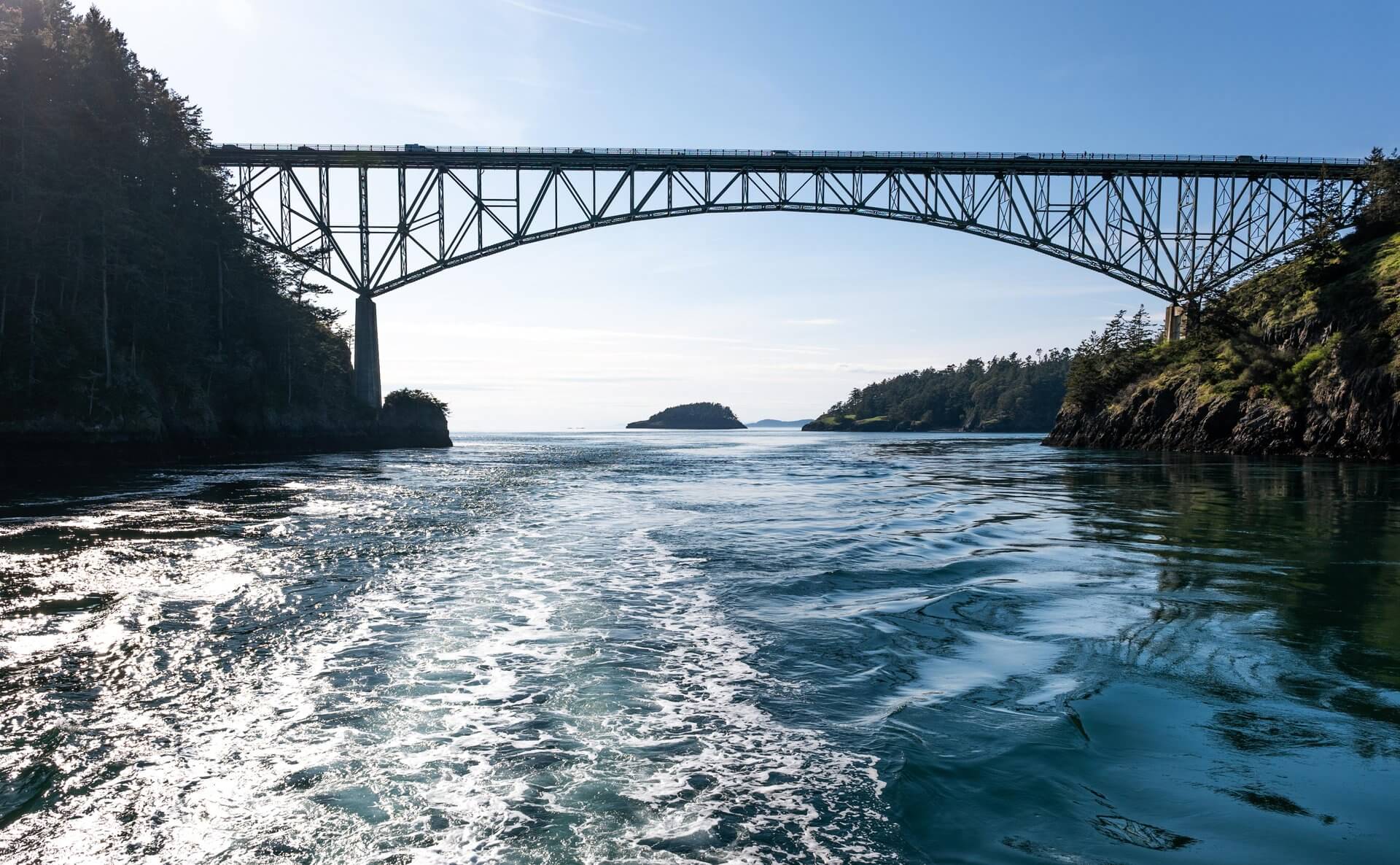
Deception Pass, a small gap between Whidbey and Fidalgo islands, is bridged by the iconic Deception Pass Bridge. Every year between April and September, orca, humpback, minke, and gray whales cruise its waters, feasting on the abundant salmon runs and thriving on deep upwellings from swift tidal currents.
Besides being spectacularly beautiful and the most visited state park in Washington, Deception Pass State Park is a choice spot for viewing whales from land. West Beach, North Beach, and West Point have excellent vantage points and gorgeous hiking trails. The 0.8-mile, paved Sand Dunes Interpretive Trail along West Beach overlooks Rosario Straight and is ADA-compliant. Alternatively, the 1.8-mile North Beach Trail is a forested trail hike with side paths to the beach. To whale watch from the water, hop on a high-speed, catamaran-style jet boat with Deception Pass Tours.
While in the area, the Langley Whale Center is worth a visit to learn more about marine mammals and get the scoop on the latest sightings. In April, Langley and the Orca Network host Welcome the Whales, which coincides with gray whales migrating north.
Also See: 3 Island Day Trips from Seattle by Ferry
Fort Worden Historical State Park, Port Townsend
Fort Worden Historical State Park overlooks Admiralty Inlet, a passageway for whales chasing chum salmon and other delights. From Point Wilson Lighthouse, you can look north across the Strait of Juan de Fuca, an important whale thoroughfare.
Another good option in the park is half a mile south at the Port Townsend Marine Science Center (PTMSC). From the PTMSC pier, you can often spot Southern Residents, transient orcas, and gray whales. Beyond spotting whales, visitors can listen to them. A hydrophone is stationed on the pier as a part of the Salish Sea Hydrophone Network. Speakers on the pier play live whalesong in real time. Within the PTMSC museum, find a hanging whale skeleton and displays about the Salish Sea. A Discover Pass is required within the park.
For offshore exploration, Puget Sound Express offers boat tours from Port Townsend from spring through fall. Special gray whale tours are held in March when these majestic creatures migrate through the Strait of Juan de Fuca to Alaska.
Port Angeles
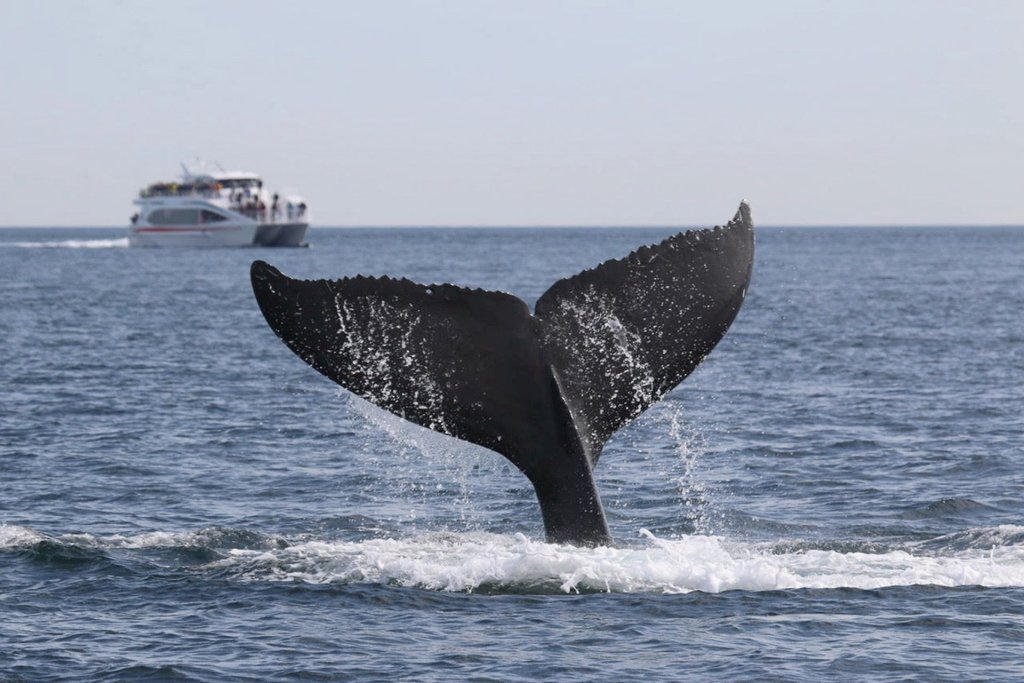
On the Olympic Peninsula, the Salt Creek Recreation Area just west of Port Angeles has prime vantage points along the bluffs, with possible sightings of humpback, gray, orca, and minke whales from May through October. Much of the water and tidal zones are protected as a marine sanctuary and rich in food for whales. The bluff’s edge near the stairs leading to Tongue Point is a fabulous spot to scan Juan de la Fuca. Crescent Bay is a favorite haunt of the gray whale, and Salt Creek’s western shoreline is a great place to search for their hallmark heart-shaped tails.
On the waterfront in the center of town, learn about marine mammals, seabirds, tidepools, and deep-sea canyons at the Olympic Coast Discovery Center. More viewing opportunities can be found at Ediz Hook, a 3-mile sand spit. For a guided boat tour, Puget Sound Express departs from the Port Angeles wharf.
Seabrook and Westport
The charming community of Seabrook rests atop rugged bluffs overlooking the Pacific, making it a fantastic location for gray whale watching in Washington from spring through fall. The Northwest Glen neighborhood perches over the Northwest Glen Conservation Area, offering a solid vantage point. North of town, Pacific Beach State Park is a great option during spring, when whales feed on the smelt that spawn near land.
About an hour south, Westport sits on a finger of land jutting into Grays Harbor, where it opens to the Pacific Ocean. On the west side of town, Westport Light State Park is part of the Whale Trail where you can best glimpse gray whales from March through May. In the Westport Marina, find a viewing tower with multiple platforms and telescopes perfect for scanning the sea. Cap your visit by stopping at Westport Maritime Museum, which showcases a full whale skeleton.
La Push
During April and May, migrating gray whales pass through La Push. At the northern end of First Beach, there’s a popular Whale Trail site that gray whales and orcas frequent in spring. Just north of the river mouth from La Push, Rialto Beach is a gray whale-watching hotspot within Olympic National Park. As a bonus, the beach’s rugged beauty seems like a postcard, complete with sea-tumbled logs and sea stacks dotting the horizon. Due to popularity, aim to visit during the week.
Cape Disappointment
At the southwestern tip of Washington State, Cape Disappointment sits where the Columbia River joins the pounding waves of the Pacific Ocean. The estuary brims with food and nutrients that frequently draw migrating gray whales.
Cape Disappointment State Park covers most of the narrow isthmus and is beautiful with its sheer basalt cliffs and wind-swept trees. The views from the Lewis and Clark Interpretive Center and North Head Lighthouse are the best for whale spotting, especially with binoculars. Gray whales are the main attraction here, with the best viewing opportunities from March through May when the weather is clearer.
Around the bend at Fort Columbia State Park on the Columbia River, humpback whale sightings coincide with the smelt runs in the spring and summer. They swim up into the Lower Columbia to feast. Due to the size constraints of the river, onlookers can get close-up views of tail flapping and breaching.
Also See: Columbia River Gorge to Coast Road Trip
Point No Point Lighthouse
Sitting on a spit of land on the Kitsap Peninsula, Point no Point Lighthouse watches over strong currents that attract baitfish, salmon, and other food for whales. Southern Resident orcas can be seen in the fall, while transient orcas are more common in winter. Humpback, minke, and gray whales are occasionally seen as well. For hikers, the 2-mile Point No Point Trail explores the shoreline and passes a viewing platform.
Whale Watching FAQ
What are the best months for whale watching in Washington?
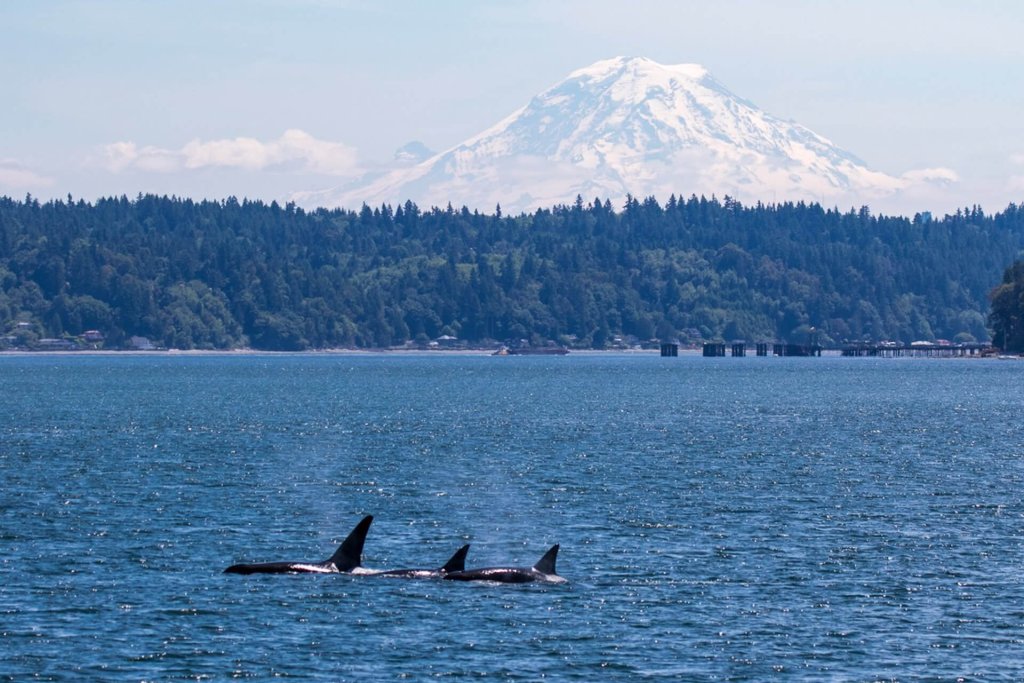
“Generally, April through October is best for whale watching in Washington,” says Tracie Merrill, education curator at The Whale Museum in Friday Harbor. “Though if you’re lucky, you can see killer [orca] whales and minke whales year-round.”
March through May is the best time to see northbound gray whales, whereas Southern Resident orcas follow the bounty of salmon runs and can be best seen April through September. Humpbacks are frequently seen from May through June, though they can be spotted throughout the spring and summer. Transient orcas and minke whales can be seen year-round. The Whale Trail details migration patterns for different species as well as the best times to visit specific Whale Trail locations.
Take “peak whale seasons” with a grain of salt. “Whale behavior and travel patterns have changed considerably in the last two decades,” says Erin Gless, executive director of the Pacific Whale Watching Association. “It’s possible to see any type of whale at any time of year nowadays.”
Because migration patterns aren’t exact and pods can be spread out, December through February can be a time to see whales migrating through places like Alki Beach in Seattle and Cape Disappointment, although choppy winter seas can make viewing more difficult.
What Kind of Whales Can You See?
Orcas (Southern Residents and transients)
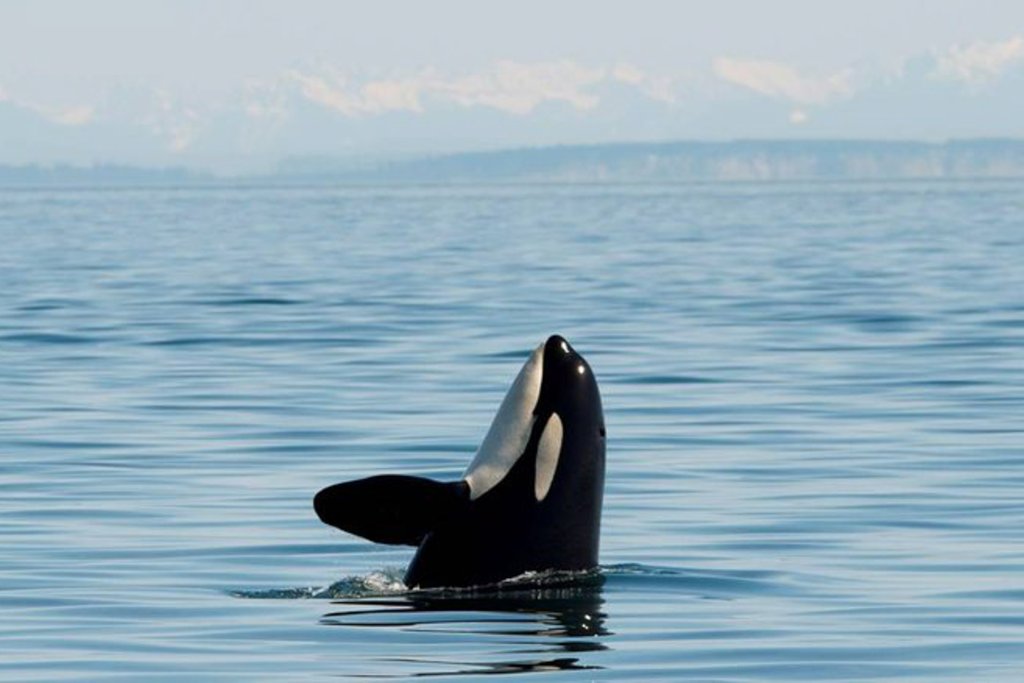
Southern Resident orcas are 26-32 feet long and distinguished by large, rounded dorsal fins (6 feet on males and 2-3 feet on females). They feed on fish, preferably Chinook salmon, and are seen most frequently from May through September, aligning with the salmon runs. These endangered whales organize themselves in matrilineal pods known as J, K, and L, so if you see one, you might be looking at four generations of orcas.
Transient (or Bigg’s) orcas are genetically distinct and hunt marine mammals. Bigger than the Southern Residents, they can be spotted year-round and are distinguished by pointed dorsal fins.
Gray Whales
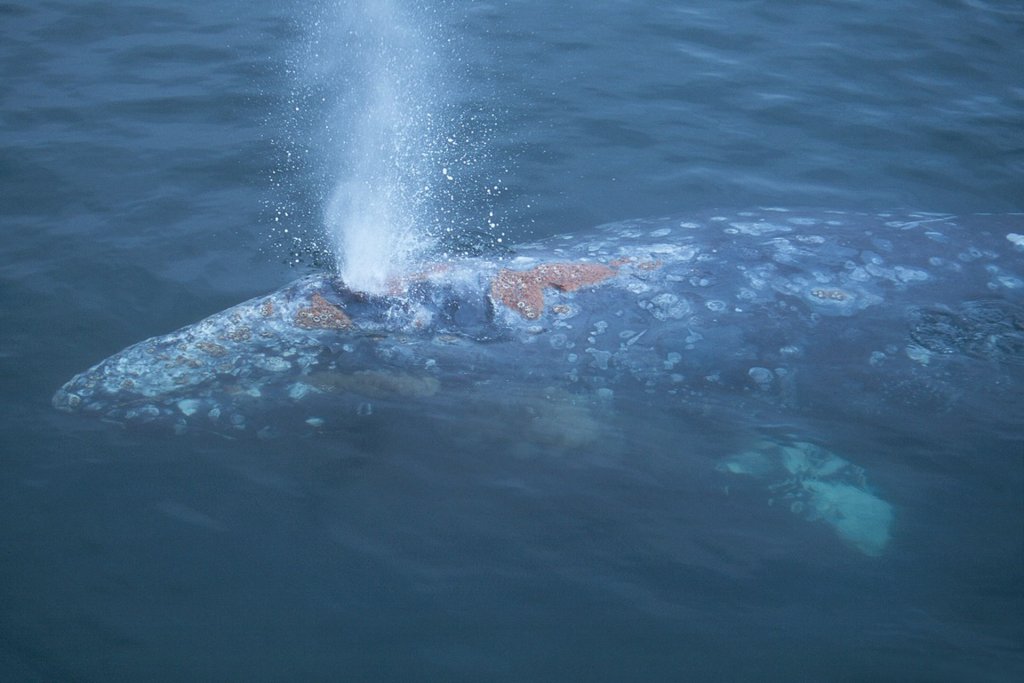
In the winter, gray whales, which can grow between 43-46 feet long, breed and birth in Baja California before migrating 14,000 miles back to Alaska in spring—the longest migration of any animal. March through May is the best time to see them. They tend to be closer to land and slower when traveling with new calves. A group of about 300 resident gray whales summer in the Northwest instead of returning to the Bering Sea. Keep an eye out for their heart-shaped tails.
Humpback Whales
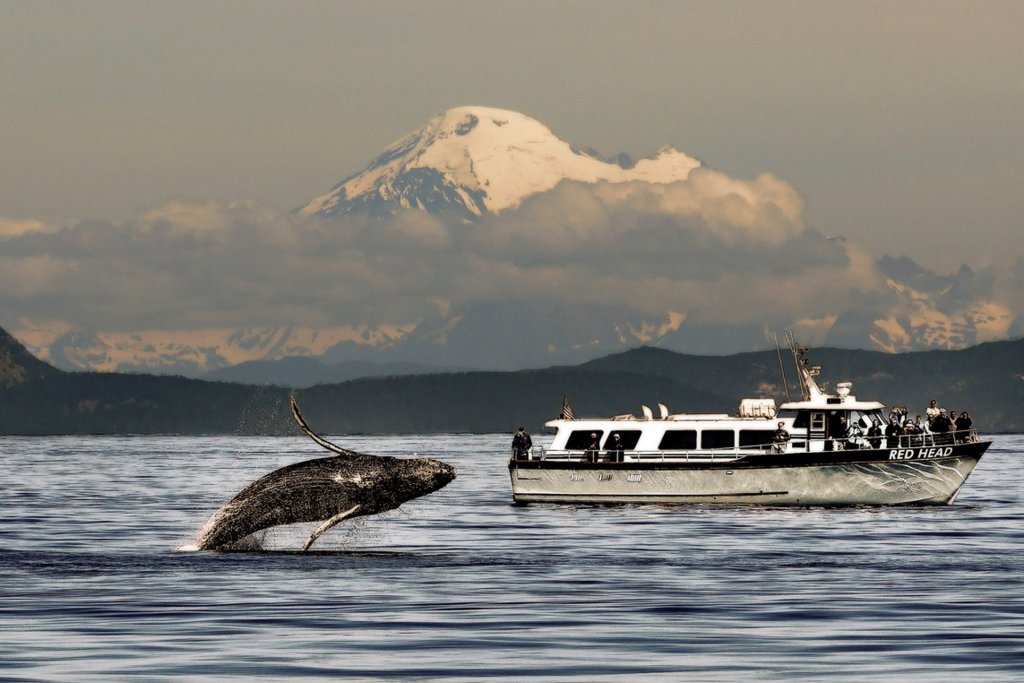
Despite their large size, which can reach 45-50 feet long, humpbacks are acrobatic, often engaging in aerial displays, tail lobbing, and flipper slapping. Spring and summer are the best seasons to view them as they migrate up to British Columbia. Look for large spout blows, small, knobby dorsal fins, and large pectoral fins. Recently, there has been a “humpback comeback” in the Pacific Northwest, making sightings more frequent.
Minke Whales
Minkes don’t have full migration patterns and can be spotted year-round, though they are most commonly seen in summer. Note that they can be tricky to spot because they don’t hang around the surface much. At 25-27 feet long, they are smaller but also fast, reaching speeds of up to 16-21 miles per hour.
Can you see whales from shore in Seattle?
While whales have been spotted from the pier in downtown Seattle, Alki Beach in West Seattle is known as the best place in the city to see whales from shore, especially in fall and winter.
About the Author
Ellee Thalheimer is a freelance writer and guidebook author based in the Pacific Northwest who has contributed to publications like Lonely Planet Guidebooks, Alaska Airlines Magazine, and Adventure Cyclist Magazine. When she can’t get outside, she writes fiction, drinks local IPAs, and perfects her handstands.
Featured image photo credit: Lincoln Humphry / Courtesy of San Juan Cruises