
Throughout Washington, abandoned mining communities and eerie ghost towns are sprinkled among some of the state’s most beautiful natural terrain. These forsaken or forgotten communities tell important tales of movement and change.
Today, weathered buildings, abandoned mining equipment, cemeteries, and overgrown foundations offer a window into Washington’s past. From former mining camps to once-thriving railroad communities, explore these ghost towns while learning about their history.
Discover Washington Ghost Towns
Govan
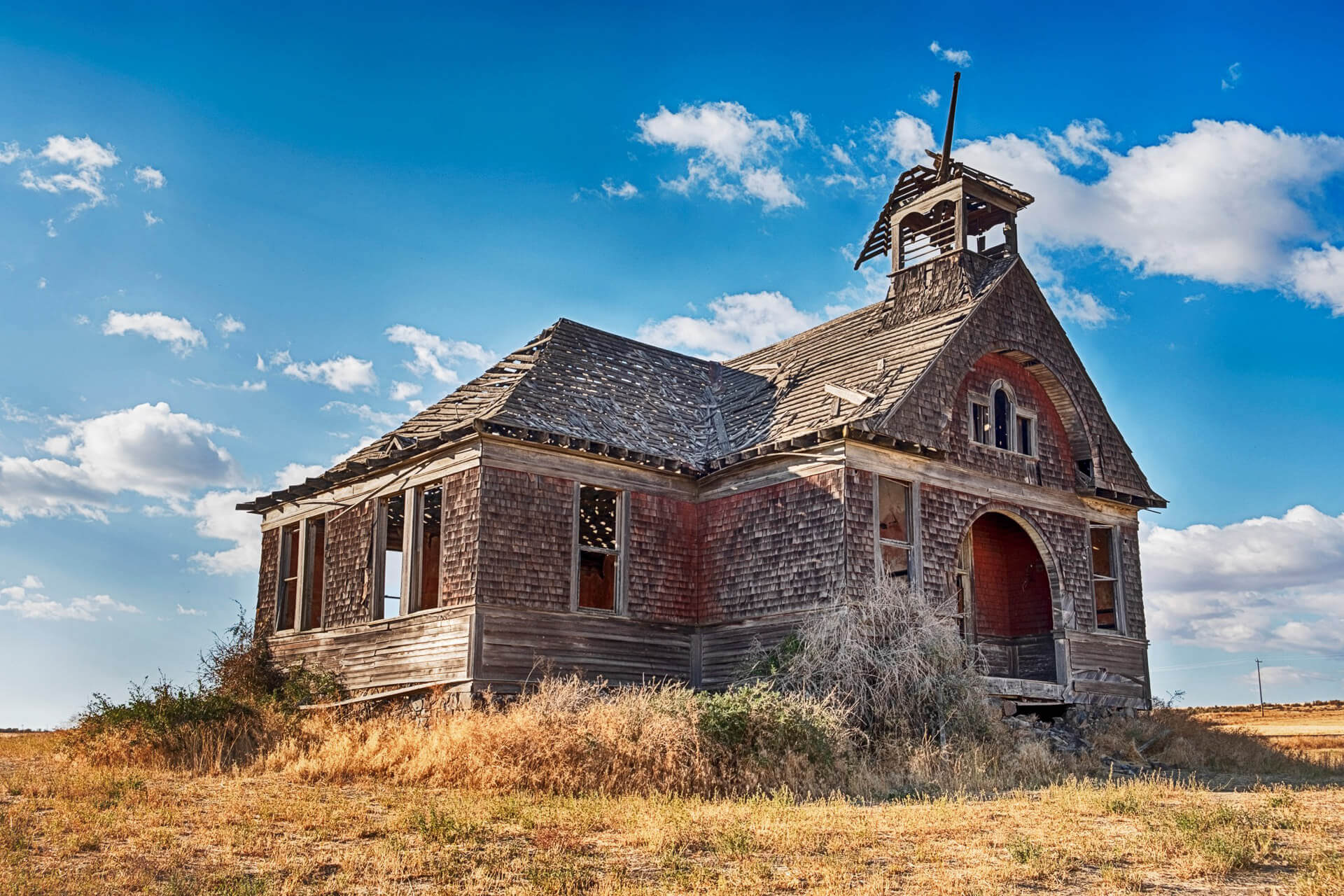
East of Coulee City in Lincoln County, Govan got its start with the advent of the Central Washington Railway in 1889. The railroad depot eventually grew to a small town thanks to its role in shipping grain. A fire in the 1920s destroyed much of the town’s business district. In 1933, Highway 2 bypassed Govan, hastening the town’s demise.
Today, this is one of the most well-known Washington ghost towns where you can see the remains of a post office and historic schoolhouse that closed in the 1940s. The scenic schoolhouse, paired with the town’s history of murders in the early 20th century, makes this a destination popular with both photographers and history buffs.
Also See: Discover Haunted Places in Washington
Sherman
Only 15 minutes northeast of Govan, the town of Sherman lost its population when new roads, like Highway 2, drew folks to larger population centers. Today, you can explore the wide-open landscape and see the community’s church, cemetery, and the partial remains of the schoolhouse.
Copper City
Tucked into the eastern Cascade Mountains near Chinook Pass, Copper City served dozens of mining claims in the early 1900s. While the mining boom never fully materialized, remnants of the settlement remain scattered among the forest today. A short hike leads visitors to collapsed cabins, old foundations, and other traces of the former mining community.
Also See: Drive the Chinook Pass Scenic Byway
Old Molson
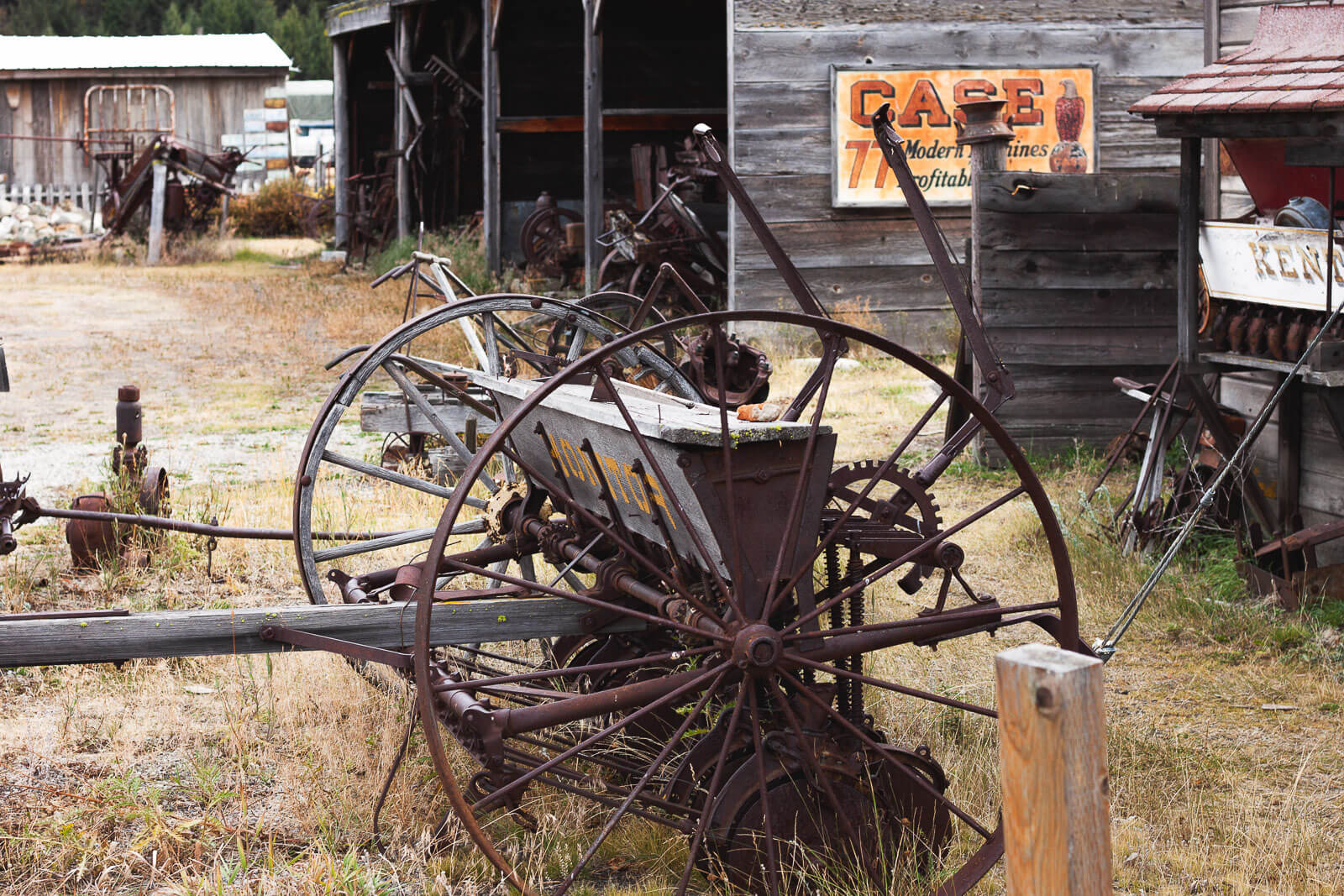
Near the Canadian border in Okanogan County, Old Molson is home to historic buildings, farm equipment, and other artifacts that evoke the community’s pioneer past. Once a mining town, most of the population left for New Molson when homesteading swept up most of the territory. Across the road, the Molson Schoolhouse Museum houses photographs, household objects, hand tools, and a restored classroom. The schoolhouse closed to students in 1969 and reopened as a museum in 1982. You can visit seasonally from Memorial Day through Labor Day.
Also See: Discover the Okanogan Trails Scenic Byway
Nighthawk
Also in Okanogan County, Nighthawk is one of Washington’s oldest mining districts. Many original structures can be traced back to 1903, including the hotel, schoolhouse, mining office, and mill. Over time, operating costs and drops in metal value caused the mines to shut down and the population to dwindle.
Liberty
East of Cle Elum in the Cascade Mountains, Liberty is considered the state’s oldest mining town site, according to the Bureau of Land Management. Originally called Meaghersville, this well-preserved community was prospected in 1867 and settled in 1873 by brothers Newton and Benton Goodwin following the discovery of gold. It was added to the National Register of Historic Places in 1974.
Today, visitors can view old mining equipment, interpretive signs, and historic buildings. This is a great option for families looking to immerse themselves in Gold Rush history. The nearby Liberty Recreation Site offers year-round camping.
Melmont
Located on the outskirts of Mount Rainier National Park off Highway 165, Melmont was a coal town founded in 1900. At their peak, the mines produced 4% of Pierce County’s coal, and the bustling town boasted a hotel, saloon, train depot, and houses for Northwest Improvement Company workers. When the railroad made the leap from steam to diesel and electric power in 1918, the town began to die out. By the 1920s, much of it was destroyed by a fire.
Today, you can hike the often-muddy Melmont Ghost Town trail that follows an abandoned rail grade. You’ll spy decaying vehicles, building foundations, and the remnants of an old wagon bridge abutment and an old school basement.
Travel note: Due to the Fairfax Bridge closure, you can only access the trail from Carbonado or one of the pullouts before the road closure. Check the Washington Trails Association for current access information and directions before visiting.
Monte Cristo
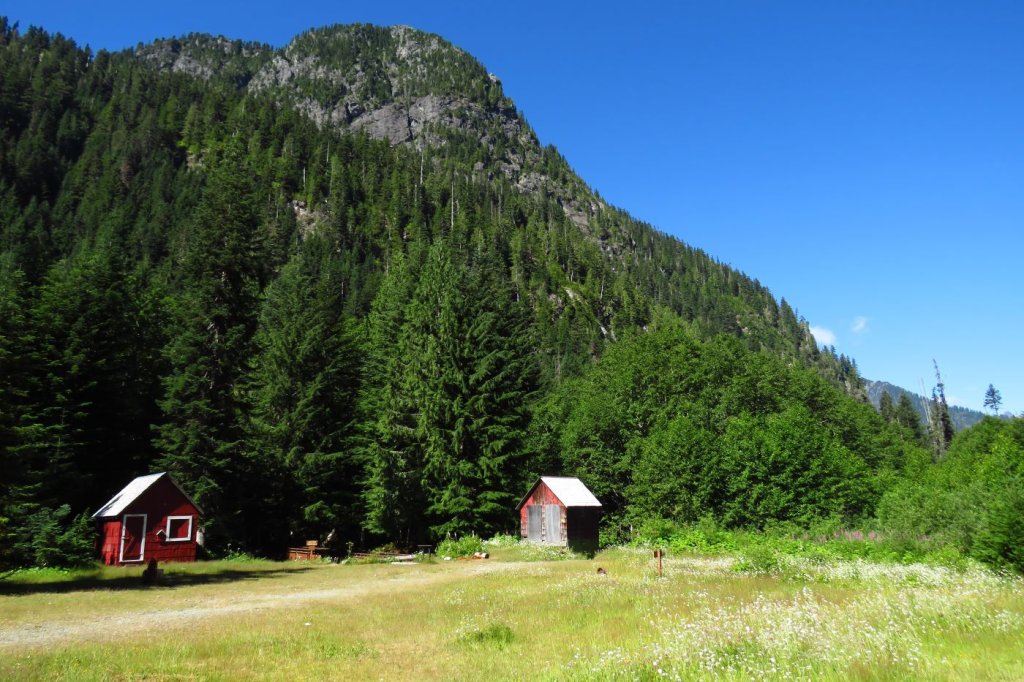
East of Granite Falls off Mountain Loop Highway, Monte Cristo is one of the better-known Washington ghost towns. This abandoned mining community is accessible via an 8-mile round-trip hike with about 700 feet of elevation gain. Rusty signage and abandoned equipment and buildings will whisk you away to a bygone era. A mining boom brought the village to life in the 1890s, but Monte Cristo couldn’t survive funding issues and a dip in mining potential by 1907.
To reach this Washington ghost town, start at the Barlow Pass trailhead and walk the closed road, which follows the route taken by miners more than a century ago. The route includes a log crossing over the South Fork Sauk River. Check current trail conditions before setting out.
For more hikable ghost towns, check out this resource from the Washington Trails Association.
Chesaw
Located about 30 minutes east of Oroville, this small Washington ghost town is alive with history. The town experienced a short-lived boom when placer gold was discovered nearby, and later became a logging community. At its height, the destination was home to hotels, a three-story livery barn, a blacksmith shop, a couple of department stores, a barber shop, a post office, three saloons, a bank, and more. Today, the town is merely a fragment of what it was, but the remaining structures include a false-front building plus other functioning structures, like a tavern where passers-by can grab a burger.
Claquato
Once the Lewis County Seat, today only two landmarks remain in Claquato: the cemetery (with its famous fir tree, once a shelter for pioneers) and Washington’s oldest standing church. Although the church was restored in the 1950s and added to the National Register of Historic Places in 1973, it still boasts an original bell and a crown-of-thorns steeple. The area was originally a seasonal campsite for Native Americans, whose hunting and fishing trails led to the Chehalis and Neuwaukum rivers.
In the 1850s, Claquato rapidly evolved into a thriving lumber town under the leadership of Hawkins Davis, until his death due to a fall at the mill. About a decade later, the railroad bypassed Claquato, which led to its eventual abandonment; the town was officially removed from the county records in 1902.
Today, the church is maintained by the Lewis County Parks Department, with viewings of the interior available by request during the summer months.
Visiting Washington Ghost Towns
Throughout your explorations, be sure to respect the natural surroundings. Leave all plants, structures, and abandoned equipment undisturbed to help preserve the history of the sites. Also remember to pack out everything you bring with you, and do not touch any artifacts you find at these cultural sites. If you happen to glimpse wildlife, remain a safe distance away, and also be considerate of fellow visitors you might pass along the way. Responsible visits ensure that future generations can enjoy these magical glimpses into the past, too.
Set out on a one-of-a-kind adventure, and discover the storied histories of these Washington ghost towns.
About the Author
Corinne Whiting is an avid traveler, nature lover, and concertgoer who has called both Washingtons home. Corinne contributes to outlets ranging from National Geographic Traveler and 10Best/USA Today to The Seattle Times and 1889 Washington magazine. Her favorite assignments involve interviewing interesting people about their inspiring passions
Featured Image: EAC Photography